Search for 'how to check if shilajit is real' and you will find the same two home checks again and again: the water test and the fire test. They are popular because they need nothing but a glass, a spoon and a flame. This guide explains how people do the shilajit fire and water test, what each one can show, and, just as important, what they cannot prove. We will also cover safety, because heat and a spoon of resin are not a toy. The short answer is that these tests can help you catch an obviously poor product, but they cannot tell you that resin is pure or free of heavy metals. For that you need a lab report. It is part of our guide on how to identify asli vs nakli shilajit. Last updated: October 2026.
What home tests can and cannot do
A home test is a screening tool. If a product fails it badly, for example it will not dissolve at all or leaves a heap of grit, you have a reason to be suspicious. If a product passes, you have learned very little, because a well-made imitation or an unpurified resin can pass too. None of these tests measure fulvic acid, and none can detect lead, cadmium, arsenic or mercury, which are the real safety questions. Keep that limit in mind through everything below.
The water test: how to do it
Use warm, not boiling, water in a clear glass. Add a pea-sized portion of resin, about 200 to 300mg, and stir gently for a minute or two. Then watch. Purified shilajit is generally expected to soften and dissolve gradually, turning the water a deep brown-black. Watch for what is left behind. A small amount of fine sediment can occur with natural resin, but heaps of sand, grit or sludge, an oily film on top, or a lump that does not break down at all are signs that something else may be in the product.
What the water test shows, and its limits
The water test is the most useful of the home checks because it is simple, safe and tells you something about solubility. But it has limits. Some fillers dissolve in water too, such as sugars or syrups, so a product that dissolves is not automatically pure. Different brands also dissolve at different speeds depending on how they are made. Treat the result as a hint rather than a verdict.
The fire test: how it is usually done
The fire test is described online in several versions. In the common one, a small amount of resin is placed on a metal spoon or foil and held over a flame to see how it behaves. The claim is that genuine resin softens, bubbles or puffs up and does not burn like wax or sugar, while some fakes melt, burn with a flame, smoke heavily or leave black residue. Reports differ, and there is no standard method, so the result is hard to interpret. We do not recommend the fire test as a way to judge quality.
If you do try it: safety first
Only use a tiny amount, the size of a grain of rice. Do it outdoors or near an open window, away from flammable things, with a metal spoon or foil and a long lighter. Keep children and pets away, do not breathe the smoke, and never taste or take resin that has been heated this way. Put out the flame and let everything cool before touching. A heated resin sample is waste, not something to consume afterwards.
What can go wrong with these tests
People often draw too much from a single test: they see a dark liquid and conclude the product is pure, or see a little smoke and conclude it is fake. Both conclusions are weak. Quality also differs between batches of the same brand, so one jar passing does not guarantee the next. A test done once at home tells you about that small piece, on that day, with your method.
What gives real proof: a lab report
An independent lab report shows the measured fulvic acid percentage and the heavy metal results for a specific batch, and the jar's batch number should match it. This is the only way to check what actually matters. Ask the seller for the report before you buy, and check our guide on how to read one so you know what a good report looks like.
About Chitrali Shilajit
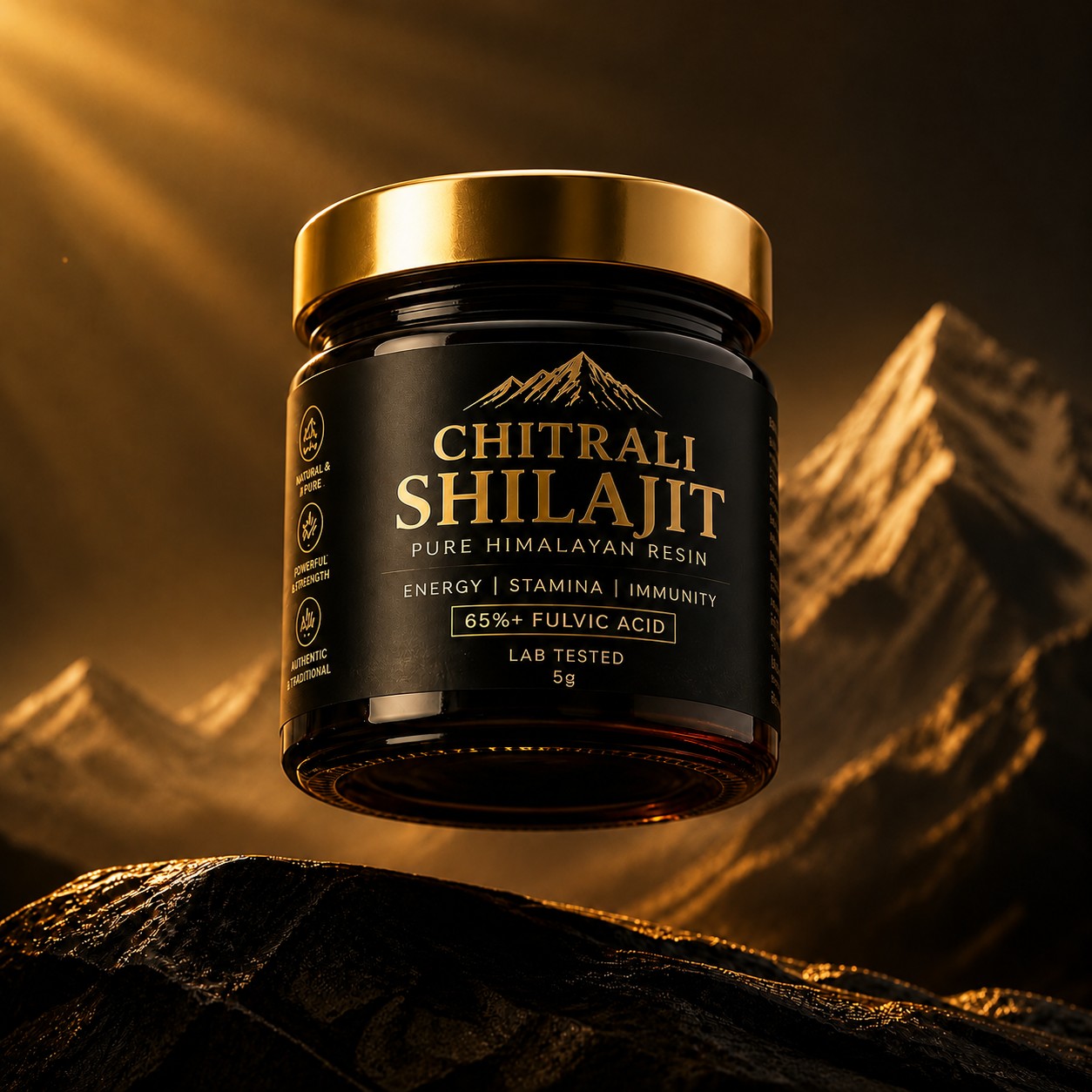
We sell one product: a 5g jar of 100% pure shilajit resin at Rs. 1,999, with no fillers or additives. It is 65%+ fulvic acid, and our resin was lab-tested by PCSIR in July 2025, with lead, cadmium and arsenic not detected. You can request the lab report on WhatsApp, and we offer cash on delivery across Pakistan, so you can check the parcel before you pay. You can view the product page or browse the shop.
Frequently asked questions
How do you do the shilajit water test?
Dissolve a pea-sized portion of resin in a glass of warm, not boiling, water and stir. Purified resin generally dissolves gradually and turns the water brown-black. Heaps of grit, an oily film or a lump that will not break down are warning signs.
Does the shilajit fire test prove it is real?
No. Results differ and there is no standard method. We do not recommend the fire test to judge quality, and if you try it, do it outdoors with a tiny amount and never consume heated resin.
Can a home test prove shilajit is free of heavy metals?
No. Only an independent lab report can show heavy metal results for a specific batch.
What is the best way to check if shilajit is genuine?
Ask for an independent lab report covering fulvic acid and heavy metals, and check that the jar's batch number matches it.
Related guides
Pure Shilajit and Origin: full guideHow to Read a Shilajit Lab Report: A Simple Checklist
What a shilajit lab report should show, how to read fulvic acid and heavy metal results, what 'not detected' means, and the red flags to watch for.
Shilajit Nutrition Facts — What's Really Inside Chitrali Shilajit
What's actually in Chitrali Shilajit resin: fulvic acid content, trace minerals, heavy metal test results — plus how to read any shilajit lab report yourself.
Next guide: Shilajit Price in Pakistan (2026): How to Judge What You Pay
Chitrali Shilajit is a dietary supplement and is not intended to diagnose, treat, cure, or prevent any disease. Individual results may vary. Consult a healthcare professional before use, especially if you have any pre-existing medical conditions.