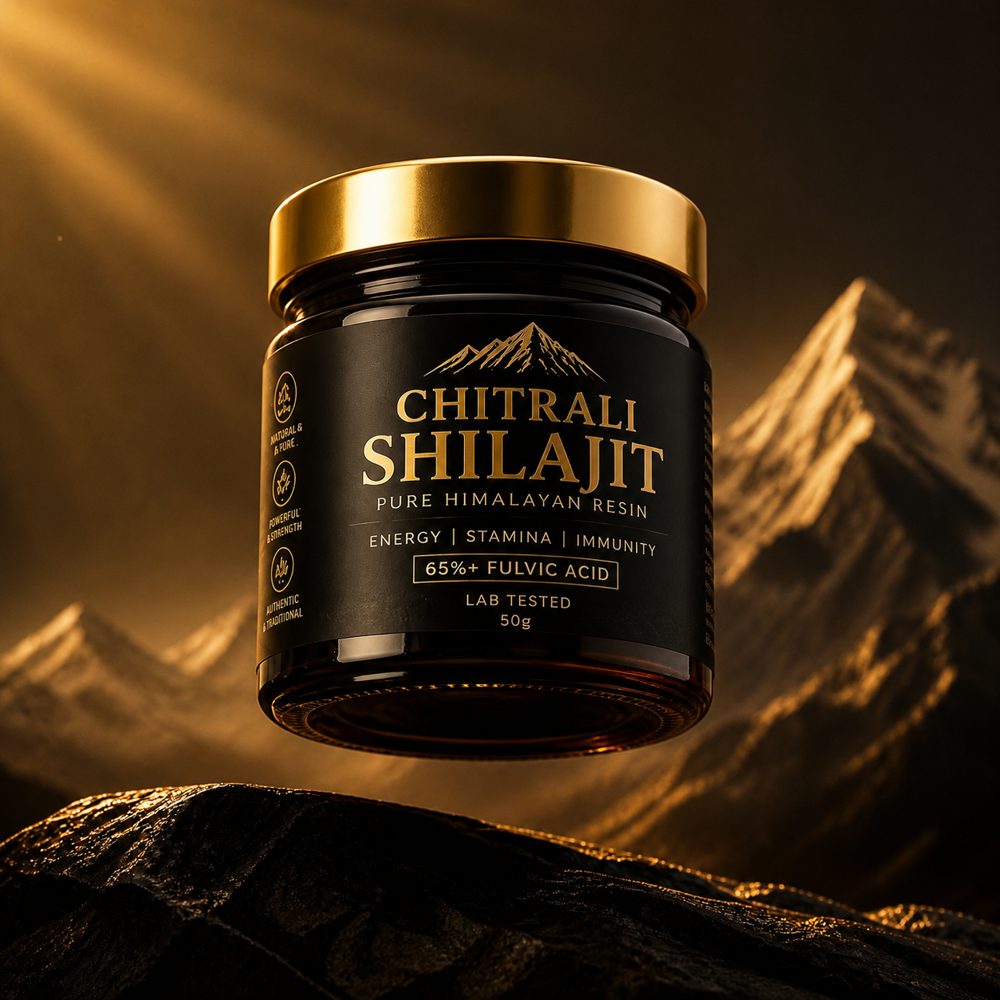
Unlike packaged foods, shilajit resin does not come with a standard nutrition facts label — there is no official panel of calories, vitamins, or macros for a mineral resin. What you can know, and should know, is its mineral and compound content: how much fulvic acid it contains, what trace minerals are present, and whether it has been screened for heavy metals. This article breaks down what is actually in Chitrali Shilajit using only our verified, tested data — nothing invented — and then explains how to read a shilajit lab report so you can evaluate any brand's claims, not just ours.
What fulvic acid is, and why its percentage matters
Fulvic acid is a naturally occurring organic compound found in humic substances — the dark, decomposed plant-and-mineral material from which shilajit forms over centuries in high mountain rock. It is widely regarded as the key compound people look for in shilajit, valued for how it interacts with minerals and supports their absorption. That is why the fulvic acid percentage is the single most useful number on any shilajit lab report: it tells you how concentrated and well-purified the resin is. Lower-quality products — or products diluted with fillers — show low fulvic readings, which is exactly what a lab report exposes. Chitrali Shilajit tests at 65%+ fulvic acid content, verified by PCSIR. When you compare brands, compare this number first, and always ask which laboratory produced it.
What's NOT in Chitrali Shilajit
Purity is as much about what is absent as what is present. Chitrali Shilajit is 100% pure resin — no added sugar, no fillers, no synthetic additives, no flavourings, no binding agents. It is collected by hand in Chitral in the Himalayan-Karakoram range and purified using the traditional water-based method with nothing added. Just as importantly, every batch is tested at PCSIR laboratories for heavy metals — lead, cadmium and arsenic — and as of July 2025 the results came back "Not Detected" for all three. This matters because contamination is the real risk in cheap, unpurified shilajit: the resin itself is a mineral concentrate, and without proper purification and testing it can carry whatever the surrounding rock and soil contain. A "not detected" heavy metal result from a reputable lab is the clearest evidence a brand can offer that its purification process works.
The verified numbers, in one place
Here is everything we can confirm about Chitrali Shilajit, from testing and sourcing only — we do not publish figures that have not been verified.
| Chitrali Shilajit | |
|---|---|
| Fulvic acid content | 65%+ (PCSIR-tested) |
| Format | Pure raw resin — no fillers or additives |
| Recommended serving | 200–300mg per day, mixed into warm milk, tea, or water |
| Heavy metal test status | Lead, cadmium, arsenic — Not Detected (as of July 2025) |
| Lab / certifying body | PCSIR laboratories; report available on request via WhatsApp |
| Sourcing | Chitral, Himalayan-Karakoram range — hand-collected at 3,000m+ |
How to read a shilajit lab report — for any brand
Once you know what to look for, a lab report is easy to evaluate, whichever brand it belongs to. First, the fulvic acid percentage: a genuine high-quality resin typically tests at 65% or higher; anything notably lower is a reason to ask questions. Second, the heavy metal screening: the report should name lead, cadmium, arsenic and ideally mercury, with results either below safe limits or not detected — this is the section that separates properly purified resin from risky product. Third, check the batch number and the date of testing: a report is only meaningful for the batch it covers, so it should match the batch number printed on your jar and be recent. Finally, note who did the testing — it should be an independent third-party laboratory, not the brand itself. If a brand cannot produce a report that meets all four of these points, that tells you everything you need to know before you buy.
Ask for the report before you buy
Whatever brand you are considering, make a habit of it: ask for their actual lab report — the full document, not a summary — and check that the batch number matches a jar they are actually selling. A brand that tests transparently will send it without hesitation. If you would like to see ours, message us on WhatsApp with the batch number from any jar and we will send that batch's PCSIR report, or you can order directly from the shop and request the report with your order.
Chitrali Shilajit is a dietary supplement and is not intended to diagnose, treat, cure, or prevent any disease. Individual results may vary. Consult a healthcare professional before use, especially if you have any pre-existing medical conditions.