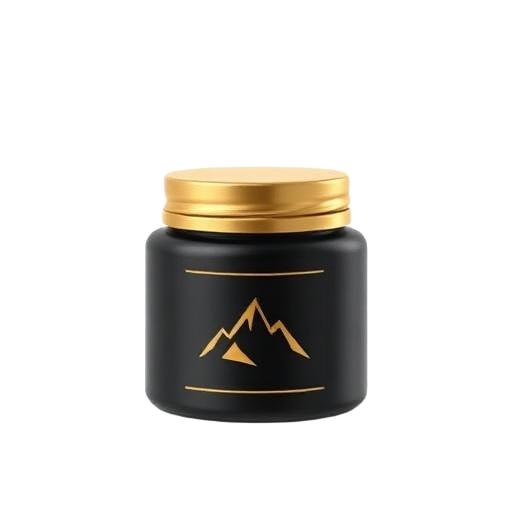

Shilajit is widely used across the Himalayan region and is generally well tolerated when it is pure and properly processed. But like any supplement, it can cause side effects in some people — especially when the product is low-quality, unpurified, or taken in more than the traditional serving. This guide is simple, factual education, not medical advice: here is what is commonly reported, who should be cautious, and how choosing a tested, transparent brand keeps the risk low.
Mild digestive upset
The most commonly reported side effect is mild digestive discomfort — occasional nausea or an uneasy stomach — particularly in people who are just starting out or who take more than the traditional pea-sized serving (200–300mg). This usually settles when the serving is reduced or the resin is taken dissolved in warm milk or water with food nearby rather than on a completely empty stomach. Starting small and staying consistent matters far more than taking a larger amount.
Contamination in unpurified shilajit
This is the most important point on the whole page. Raw shilajit, straight from the rock, is not a finished product: without proper purification it can carry heavy metals such as lead, arsenic, cadmium or mercury, as well as fungal contamination in poorly handled batches. The risk comes from the product's quality, not from shilajit itself. This is exactly why third-party lab testing matters — a proper lab report checks fulvic acid content and heavy metal levels against safe limits, and a batch number lets you match your jar to its report. An unpurified or unregulated product is the main source of the serious problems you may read about online.
Possible allergic reactions
As with any natural substance, a small number of people can be sensitive to it. Itching, a skin rash or other allergy-type reactions have been reported in sensitive individuals. If you notice any of these after taking resin, stop using it and speak to a doctor. If you have a history of allergies to herbal or mineral products, it is sensible to check with a healthcare professional before starting.
Natural iron content — who should be cautious
Genuine high-altitude shilajit is naturally rich in minerals, including iron. For most healthy adults this is simply part of its traditional appeal as a mineral tonic. But anyone with hemochromatosis, thalassemia or another iron-overload condition should be cautious, because the extra iron is not helpful in their case. If you have been told to watch your iron levels, ask your doctor before taking any mineral-rich supplement, shilajit included.
Possible interactions with medication
Traditional use and early research suggest shilajit may influence blood pressure and blood sugar, which means it could interact with medicines taken for those conditions. If you take medication for blood pressure, diabetes, or any ongoing condition, do not add shilajit on top of it without speaking to your doctor first. This is standard advice for any supplement — it is not a statement that something will go wrong, just the sensible order of things: ask first, then start.
Pregnancy and breastfeeding
There is not enough reliable research on shilajit use during pregnancy or breastfeeding to call it clearly safe, so the responsible recommendation is simple: it is not recommended during pregnancy or breastfeeding without medical advice. If you are expecting or nursing and feel you need more energy or support, that conversation belongs with your doctor, who can suggest options appropriate for you.
Sourcing is the biggest safety factor
Notice the pattern in the points above: most serious risks trace back to quality, not to shilajit itself. The same resin that is well tolerated when purified and lab-tested can cause real harm when it is raw, unregulated or adulterated. So the single most effective way to reduce risk is to buy from a brand that is transparent about sourcing and purification, third-party tests every batch, and can produce that report on request. If a seller cannot show a lab report or match it to a batch number on the jar, treat that as a hard no — whatever the price.
How Chitrali Shilajit reduces these risks
We cannot promise that any supplement is risk-free, and we will not pretend otherwise. What we do is remove the avoidable risks: our resin is collected by hand in Chitral at over 3,000 meters, purified using the traditional water-based method with no solvents or additives — pure resin, nothing else — and every batch is tested at PCSIR laboratories for fulvic acid content and heavy metals. Each jar carries a batch number, and you can request that batch's lab report on WhatsApp before or after you buy. That transparency is the safeguard, and it applies to any brand you consider, not just ours.
The sensible way to start
If you decide to try shilajit: start with a small amount — the traditional pea-sized serving of 200–300mg, dissolved in warm (not boiling) milk or water — and see how your body responds over the first couple of weeks. Speak to a healthcare professional before starting if you take any medication, manage a health condition, or are pregnant or breastfeeding. And whichever brand you choose, make lab testing and purity the deciding factor, not price. If you would like to try ours, you can find the jar in the shop, and the report for your batch is always one WhatsApp message away.
Chitrali Shilajit is a dietary supplement and is not intended to diagnose, treat, cure, or prevent any disease. Individual results may vary. Consult a healthcare professional before use, especially if you have any pre-existing medical conditions.