Every careful guide tells you to ask for a lab report before you buy shilajit. But a PDF full of numbers is only useful if you know how to read it. This guide gives you a plain checklist: what a shilajit lab report should contain, what each part means, how to read 'not detected' against a limit, and the signs that a report may not be worth trusting. You do not need a science background. It is general education, not a guarantee about any product. It is part of our guide to telling asli from nakli shilajit. Last updated: October 2026.
Why the lab report matters
Shilajit forms in rock, and unpurified resin can carry heavy metals. Home checks such as smell or the water test cannot see them, but a lab can measure them. A good report is the one piece of evidence that links a specific jar to measured results. Without it, you are relying on the seller's word.
Step 1: Who tested it?
Look for the name of the laboratory, its address and contact details, and the date of testing. The lab should be independent of the seller, not the brand's own in-house lab. Check that the report is signed or stamped and that you can contact the lab if you want to verify it. A report with no lab name, or from an unclear source, is weak evidence.
Step 2: Does it name the sample and batch?
The report should say what was tested, for example 'shilajit resin', and give a batch or lot number or other identification that matches the jar you are buying. A generic report that carries no batch number can be reused for any product. Ask the seller to match the number on your jar to the report.
Step 3: Fulvic acid percentage
Fulvic acid is the main compound people look for in shilajit, and a report may state it as a percentage. The number alone does not tell the whole story, because different labs use different methods and the result depends on the method. So check which test method is named, and do not compare numbers from different labs as if they were identical. A seller that states a percentage but shows no report behind it is asking you to take it on trust.
Step 4: Heavy metals
This is the most important part for safety. A proper report lists lead, cadmium, arsenic and mercury, with each result and a reporting limit. Some reports use units such as mg/kg or ppm, which mean about the same thing. Results should be below accepted safe limits, or marked 'not detected'. If a report mentions only some metals, or skips them altogether, ask why.
What does 'not detected' mean?
'Not detected' means the lab's instrument did not find that metal at or above its detection limit, the smallest amount it can measure. It does not mean zero, and a lab with a higher detection limit can miss small amounts. A good report shows the detection limit next to each result. Seeing 'not detected' with a low limit is the best case, and 'not detected' with no limit shown tells you less.
Step 5: Other tests, and the date
Some reports also include moisture, ash content or microbial tests. These are extras that show a more careful lab and manufacturer, but they are not required. Check the date: a test from a long time ago may not reflect today's batches, so ask whether a new batch has been tested. For deeper background on what these numbers are, see our nutrition facts guide.
Red flags in a lab report
Be careful if the report has no lab name or contact; has no batch number; is a screenshot with unclear text; lists only good news, such as fulvic acid but no heavy metals; has results that look rounded or too perfect; has a date that does not make sense; or if the seller will not share the full document. None of these proves fraud, but together they are a reason to ask more questions or to buy elsewhere.
A 60-second checklist
Independent lab named? Batch number matches the jar? Fulvic acid shown with a method? Lead, cadmium, arsenic and mercury listed with results and limits? Recent date? Complete document, not a crop? If all six are yes, you have good evidence. If several are no, ask the seller. Then use our buyer's guide for the rest of the buying checklist.
About Chitrali Shilajit
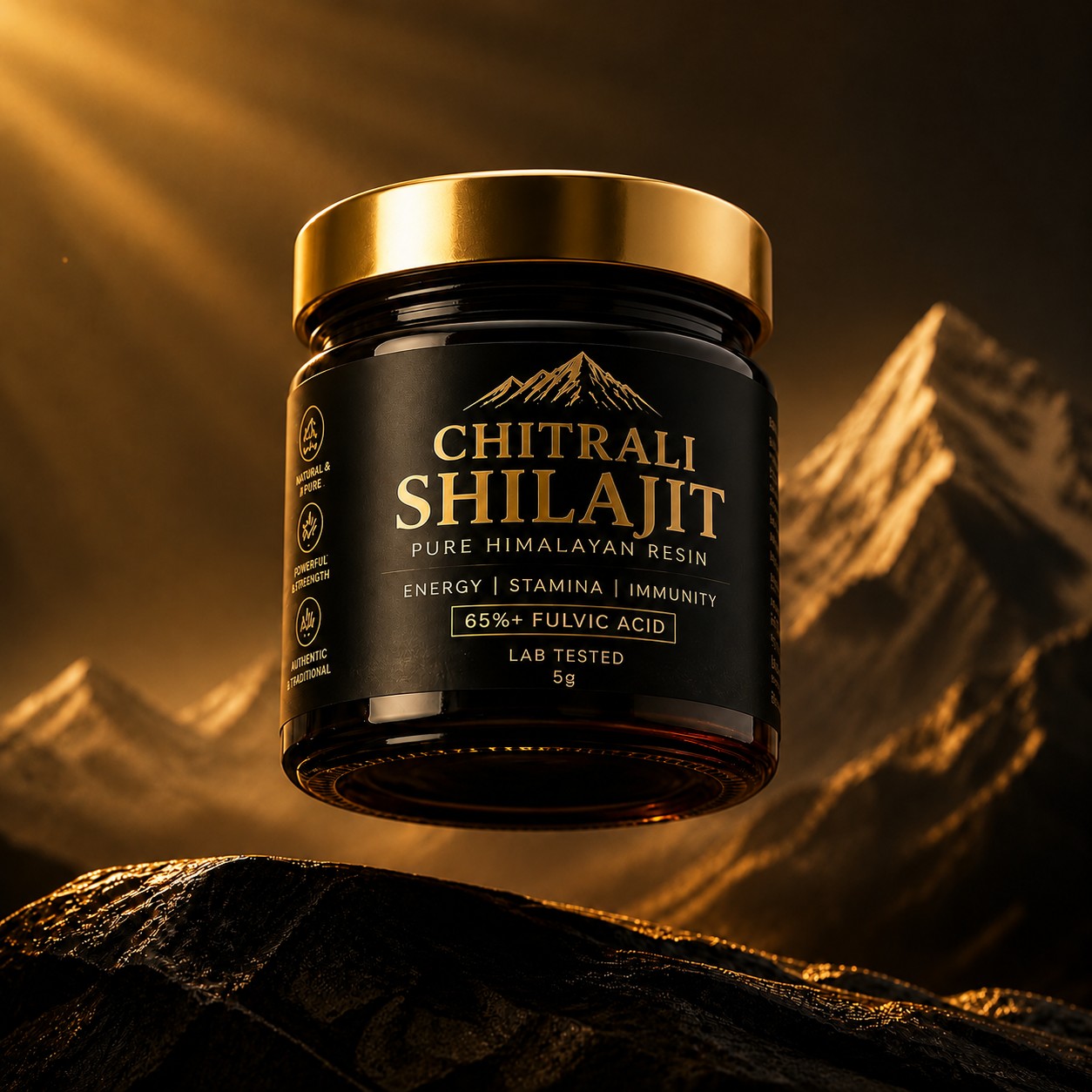
We sell one product: a 5g jar of 100% pure shilajit resin at Rs. 1,999, with no fillers or additives. It is 65%+ fulvic acid, and our resin was lab-tested by PCSIR in July 2025, with lead, cadmium and arsenic not detected. You can request the lab report on WhatsApp and check it against this checklist. We offer cash on delivery across Pakistan. You can view the product page or browse the shop.
Frequently asked questions
What should a shilajit lab report include?
The name and contact details of an independent lab, the date, the sample and batch number, the fulvic acid result with its method, and heavy metal results (lead, cadmium, arsenic, mercury) with reporting limits.
What does 'not detected' mean on a heavy metal test?
It means the lab did not find that metal at or above its detection limit. It does not mean zero, so a report should show the detection limit.
How do I know the lab report is real?
Check that it names an independent lab with contact details, carries a batch number matching your jar, and is complete. You can contact the lab to verify it.
Is a high fulvic acid percentage always better?
Not necessarily on its own. Results depend on the test method, and heavy metal safety matters more. Look at the whole report.
Related guides
Pure Shilajit and Origin: full guideShilajit Fire and Water Test: What They Show and What They Don't
How the shilajit water test and fire test work, what they can show, what they cannot prove, and how to do them safely.
Shilajit Nutrition Facts — What's Really Inside Chitrali Shilajit
What's actually in Chitrali Shilajit resin: fulvic acid content, trace minerals, heavy metal test results — plus how to read any shilajit lab report yourself.
Next guide: Shilajit Price in Pakistan (2026): How to Judge What You Pay
Chitrali Shilajit is a dietary supplement and is not intended to diagnose, treat, cure, or prevent any disease. Individual results may vary. Consult a healthcare professional before use, especially if you have any pre-existing medical conditions.