Shilajit price in Pakistan varies more than almost any other supplement. You can find jars for a few hundred rupees and jars for several thousand, and the label alone will not tell you which one is worth paying for. Price by itself does not show quality — a very cheap jar can be diluted or unpurified, while a very expensive one may simply be paying for packaging and marketing. This guide explains how to compare shilajit price per gram, why very cheap resin is a red flag, and what to check before you pay. If you are new to buying, our full guide to shilajit in Pakistan covers the wider checklist. Last updated: October 2026.
Why shilajit prices vary so much
Several real costs sit behind the shilajit rate you see on a product page. Sourcing altitude matters: resin collected from very high rock faces is harder and slower to gather than low-altitude material, and collectors are paid accordingly. Purification is the biggest hidden cost — raw shilajit contains sand, plant debris and potentially heavy metals, and proper purification takes time, clean water and careful processing. Lab testing adds more: a genuine third-party test for fulvic acid and heavy metals costs money per batch, which is why untested products can be sold so cheaply. Packaging (glass jars, seals, batch labels) and brand and shipping costs — websites, customer support, courier fees, cash-on-delivery handling — make up the rest. When two jars differ greatly in price, the difference is usually in these steps, not in the colour of the resin.
How to compare shilajit price per gram
The fairest way to compare any shilajit resin price is to ignore the jar price and calculate the price per gram. The formula is simple: total price divided by grams. A Rs. 2,000 jar of 10g costs Rs. 200 per gram; a Rs. 5,000 jar of 50g costs Rs. 100 per gram — the bigger jar is actually cheaper per gram even though the checkout total is higher. The same logic applies at every size: a shilajit 10g price, a shilajit 30g price, a shilajit 100g price or a shilajit 1kg price only becomes comparable once you divide by the weight. The table below shows how the calculation works with made-up round numbers — example only, not real market prices.
| Pack size | Example total price | Price per gram |
|---|---|---|
| 10g | Rs. 2,000 (example only) | Rs. 200 per gram |
| 30g | Rs. 4,500 (example only) | Rs. 150 per gram |
| 100g | Rs. 12,000 (example only) | Rs. 120 per gram |
| 1kg | Rs. 90,000 (example only) | Rs. 90 per gram |
Why very cheap shilajit is a red flag
Genuine purification, testing and packaging have real costs, so a shilajit price far below everything else on the market usually means one of those steps was skipped. Common shortcuts include selling unpurified or diluted resin — raw material cleaned only roughly, or stretched with fillers like gur, coal powder or other pastes. Cheap products also typically have no lab test, so there is no proof the heavy metals are within safe limits; no stated fulvic acid percentage, so you cannot judge concentration; and no batch information, so nothing on the jar can be traced back to a specific test. None of this means every affordable product is bad — but when a price looks too good to be true, the missing paperwork is usually where the saving came from.
What to check before you pay
Before paying any shilajit rate, run through a short checklist. 1) Third-party lab report: ask for a report from an independent laboratory showing heavy metals below safe limits or not detected. 2) Fulvic acid percentage: the brand should state a number and be able to back it with the report. 3) Ingredient list: pure resin should list one ingredient — shilajit — with no sugars, binders or blends. 4) Return policy: know what happens if the parcel arrives damaged or is not as described. 5) Cash on delivery: COD lets you receive the package before paying and lowers the risk of trying a new seller. For simple at-home checks you can do once the jar arrives — smell, texture, dissolving in warm water — read our guide to identifying real vs fake shilajit.
Chitrali Shilajit price
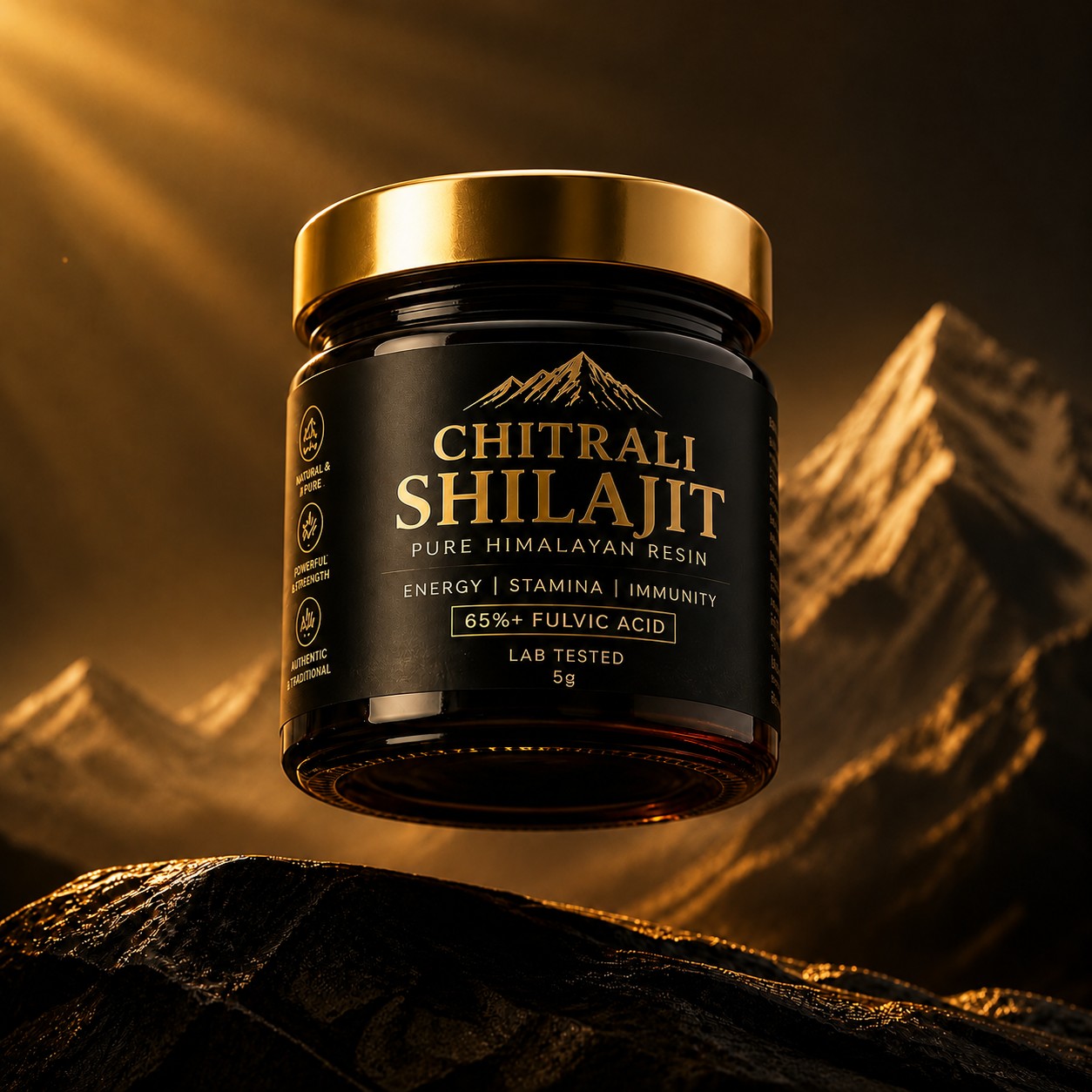
To be transparent about where we sit: Chitrali Shilajit comes in a 5g jar priced at Rs. 1,999, which works out to Rs. 400 per gram. That is a smaller jar at a higher per-gram price than large bulk packs, and we will not pretend otherwise. The price covers what is inside and behind the jar: 100% pure resin with no fillers or additives, 65%+ fulvic acid, purification, and batch testing — our resin was lab-tested by PCSIR in July 2025, with lead, cadmium and arsenic not detected. It also covers proper packaging and delivery: we offer cash on delivery across Pakistan, and free delivery on orders over Rs. 2,000. A 5g jar is also a practical way to try shilajit for the first time without committing to a large, expensive pack. Whether that trade-off suits you depends on your budget and how much you plan to use — the checklist above lets you compare us against any other seller on the same terms.
Frequently asked questions
What is a fair shilajit price in Pakistan?
There is no single fair number, because price reflects sourcing, purification, lab testing and packaging. The fairest approach is to compare price per gram (total price divided by grams) and then check what the price includes: a third-party lab report, a stated fulvic acid percentage and a clean ingredient list. A slightly higher price with proof of testing is usually better value than a cheap jar with none.
Why is some shilajit so cheap?
Very cheap shilajit usually skips one or more costly steps: proper purification, third-party lab testing, or quality packaging. Some cheap products are diluted with fillers or sold without any batch information. The low price is real — the question is which step was removed to reach it.
Is shilajit worth the price?
That depends on what you are buying and why. Pure, lab-tested resin has been traditionally used for energy, stamina and general vitality, and many users feel it may support their daily routine. A tested product with a clear fulvic acid percentage gives you something concrete for your money; an untested bargain jar gives you only a low price.
Can I pay cash on delivery?
Yes. Chitrali Shilajit offers cash on delivery across Pakistan, so you can receive your order before paying. Delivery is free on orders over Rs. 2,000.
Related guides
Buying Shilajit in Pakistan: full guideShilajit Resin vs Gummies vs Capsules: Which Format Should You Buy?
Resin, gummies, capsules, tablets, powder or liquid — a fair comparison of every shilajit format for purity, dosage control, taste and convenience.
Shilajit Resin: A Complete Guide to Pure, Natural Resin
What shilajit resin is, how it forms, how it is purified, how to use it, and how to check that the resin you buy is pure and natural.
Shilajit Energy Drink vs Shilajit Resin: What's the Difference?
A shilajit energy drink and a jar of pure resin are not the same product. What to check on the label, how to compare price per serving, and how to decide.
Next guide: Axora Foods vs Chitrali Shilajit — Gilgit vs Chitral Shilajit Compared
Chitrali Shilajit is a dietary supplement and is not intended to diagnose, treat, cure, or prevent any disease. Individual results may vary. Consult a healthcare professional before use, especially if you have any pre-existing medical conditions.