Shilajit resin is the most traditional form of shilajit — a thick, dark paste that has been used in the Himalayan region for centuries. This guide covers what shilajit resin is, how it forms, how it is purified, how to use it, and how to judge the quality of any resin before you buy it. Last updated: October 2026.
What is shilajit resin?
Shilajit resin is a natural, mineral-rich substance that forms over centuries from decomposed plant matter pressed between high-altitude rock layers. In the warmer months, it softens and seeps out of cracks in the rock, where it is collected by hand. The result is a sticky, tar-like paste with a strong earthy smell. One of its best-known components is fulvic acid, a natural organic compound that forms as plant matter breaks down, alongside a wide range of trace minerals. Pure natural shilajit in resin form is the least processed version of the substance — what you see in the jar is essentially what came out of the mountain, after cleaning.
Raw vs purified shilajit resin
Raw shilajit scraped straight from rock is not ready to use. It can contain dirt, sand, fungal matter and heavy metals picked up from the surrounding stone. Purification removes these impurities — traditionally by dissolving the raw material in water, filtering it, and gently drying the result. This is an important point: pure does not mean unprocessed. A pure shilajit resin is one that has been properly purified, contains no harmful additives or fillers, and has verified safety through lab testing. An unpurified 'raw' product is not more natural — it is simply less safe.
Shilajit resin benefits (traditional uses)
Shilajit resin has a long history of traditional use in South Asia. It is traditionally used for energy, stamina, general wellness and everyday vitality, and many people take it as part of a daily routine. In modern language, you will often see it described as something that may support energy levels and overall wellbeing. It is important to be honest here: scientific research on shilajit is still limited, and results vary from person to person. Nothing in this guide is medical advice, and shilajit is not intended to diagnose, treat, cure or prevent any disease.
How to use shilajit resin
Using shilajit resin is simple. Take a small portion — about 200–300mg, roughly the size of a rice grain or a small pea — and dissolve it in warm (not boiling) water, milk or tea. Stir until it dissolves, then drink. Do not heat the resin above warm, as high heat can damage its natural compounds. Most people take it once a day, often in the morning. For the full step-by-step guide with timing and mixing ideas, see our dedicated article on how to take shilajit.
How to tell pure shilajit resin from fake
Before you trust any shilajit resin, run through this checklist. First, the water test: pure resin dissolves slowly and fully in warm water, leaving no gritty residue. Second, the smell: genuine resin has a distinct earthy, slightly bitter smell — a perfumed or odourless product is a warning sign. Third, lab testing: a trustworthy brand can show a third-party lab report covering heavy metals. Fourth, the label: the fulvic acid percentage should be stated, and the ingredient list should contain no fillers. Our guides on identifying real shilajit and reading a lab report walk through each of these checks in detail.
Resin or another format?
Resin is the traditional and least processed format, but gummies, capsules, powders and liquid drops all have their own strengths around taste and convenience. If you are unsure which format suits your routine, our format comparison covers each one fairly.
Chitrali Shilajit resin
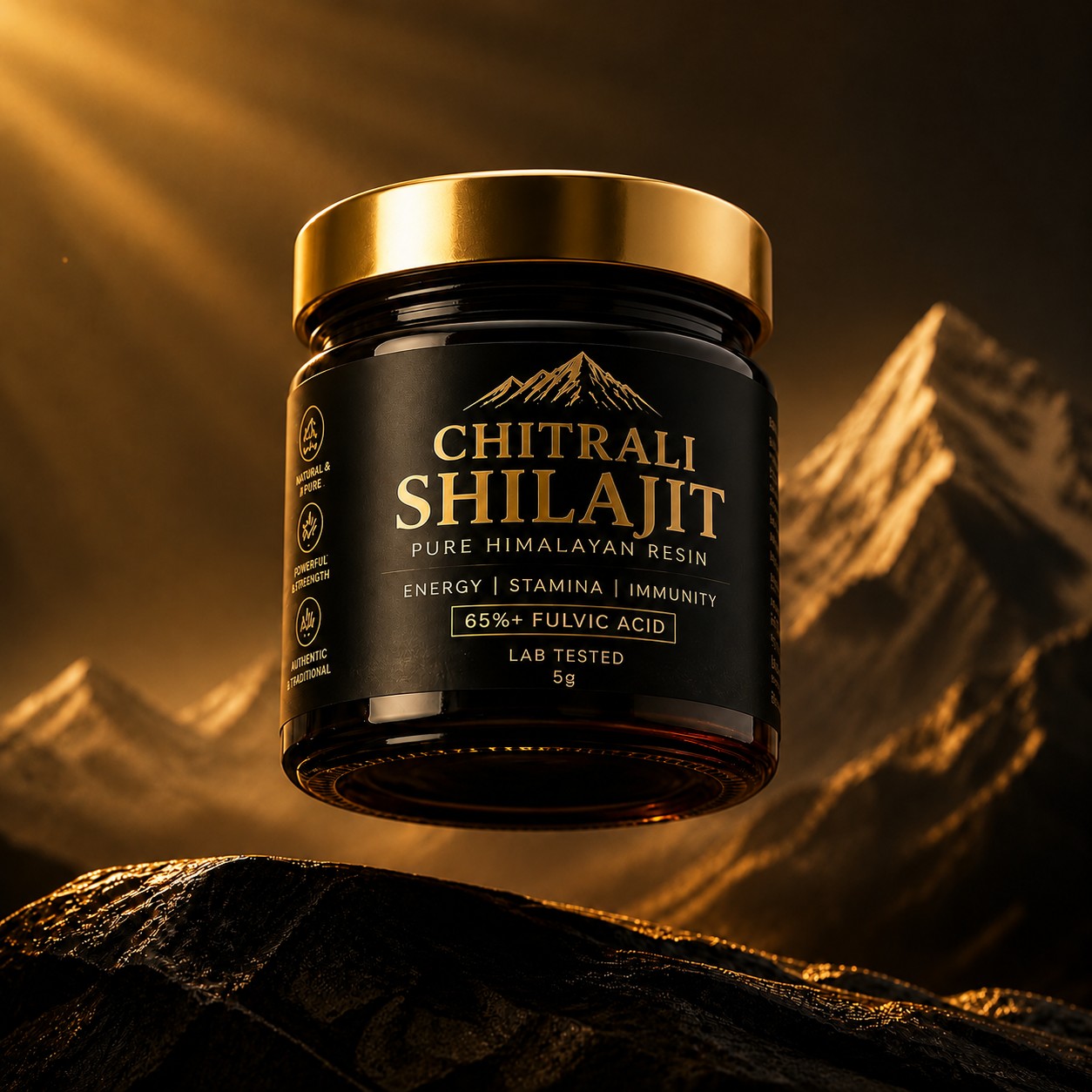
Our own product is a single jar of pure shilajit resin, sourced from Chitral. Each 5g jar costs Rs. 1,999 and contains 100% pure resin with no fillers or additives, with 65%+ fulvic acid. The resin is purified using traditional water-based methods and was lab-tested by PCSIR in July 2025 — lead, cadmium and arsenic were not detected. Every jar includes a measuring spoon, and we offer cash on delivery across Pakistan. You can view the product page or browse the shop to order.
Frequently asked questions
Is shilajit resin the same as shilajit?
Resin is one form of shilajit — the traditional, least processed one. Shilajit is also sold as gummies, capsules, tablets, powder and liquid drops. When people say 'shilajit' without specifying, they usually mean the resin.
How long does a 5g jar last?
At a daily serving of about 200–300mg, a 5g jar lasts roughly two to three weeks. Using the included measuring spoon helps keep servings consistent.
How should I store shilajit resin?
Keep the jar tightly closed at room temperature, away from direct sunlight and moisture. Resin naturally hardens in the cold and softens in warmth — this is normal and does not affect quality.
Can I take resin with milk?
Yes. Dissolving a small portion in warm milk is a traditional way to take shilajit resin. Warm water or tea work just as well — just avoid boiling heat.
Related guides
Buying Shilajit in Pakistan: full guideShilajit Price in Pakistan (2026): How to Judge What You Pay
Shilajit prices in Pakistan vary a lot, and price alone does not show quality. How to compare price per gram, spot red flags, and know what you are paying for.
Shilajit Resin vs Gummies vs Capsules: Which Format Should You Buy?
Resin, gummies, capsules, tablets, powder or liquid — a fair comparison of every shilajit format for purity, dosage control, taste and convenience.
Shilajit Energy Drink vs Shilajit Resin: What's the Difference?
A shilajit energy drink and a jar of pure resin are not the same product. What to check on the label, how to compare price per serving, and how to decide.
Next guide: Axora Foods vs Chitrali Shilajit — Gilgit vs Chitral Shilajit Compared
Chitrali Shilajit is a dietary supplement and is not intended to diagnose, treat, cure, or prevent any disease. Individual results may vary. Consult a healthcare professional before use, especially if you have any pre-existing medical conditions.